An Inspection of Severe Aircraft Engine Damage on the Tarmac
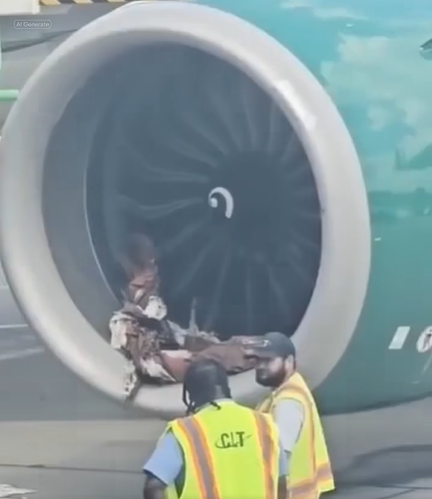
The video opens with a close-up view of a large commercial airplane engine on an airport tarmac. The engine cowling is painted a prominent and distinct teal or light green color. Inside the intake, a substantial amount of tangled, shredded debris is clearly visible. The debris appears to be brown, white, and fibrous, resembling destroyed material or organic matter. This foreign object damage is heavily jammed into the bottom section of the engine’s fan blades. The black fan blades themselves appear metallic, curved, and tightly arranged in a spiral pattern. In the foreground, two ground crew workers are standing near the damaged engine intake. They are both wearing bright, high-visibility neon yellow safety vests with reflective silver strips. One of the workers has the letters “CLT” printed in bold black text on the back of his vest. This abbreviation strongly suggests the location is Charlotte Douglas International Airport. The worker with the “CLT” vest also has long dark dreadlocks hanging down his back. The second worker is wearing a black baseball cap and has a visible beard. Both men are looking intently at the massive pile of debris lodged inside the engine. They appear to be assessing the situation and discussing the extent of the technical damage. A third individual, a man wearing a white short-sleeved dress shirt, briefly appears in the lower left corner. He looks over his shoulder toward the engine before quickly walking out of the frame. The video has no cuts or transitions, maintaining a single continuous shot. The camera experiences slight handheld shakiness throughout the duration of the recording.

This minor movement gives the footage a realistic, eyewitness or documentary feel. The background shows a blurry glimpse of the open asphalt tarmac under bright daylight. The lighting is consistent and natural, indicating the inspection is happening during the day. The audio accompanying the clip consists of a loud, steady, and low-frequency mechanical roar. This constant background noise is typical of an active airport environment with nearby operating engines. There is no audible human dialogue or conversation between the ground crew workers. The physical positioning of the two main workers remains largely static as they observe the engine. The worker on the right shifts his weight slightly but keeps his eyes fixed on the debris. The tangled mass looks severe enough to have caused significant internal damage to the aircraft. Such incidents often occur due to bird strikes or ingesting foreign objects during takeoff or landing. The spiral nose cone in the center of the fan blades is painted black with a white swirl. This white swirl design helps ground crew visually identify if an engine is actively spinning. In this video, the fan blades are completely stationary and not rotating at all. The presence of the debris likely prevents the engine mechanism from turning safely. The teal paint on the engine housing shows some minor reflections from the sky. On the right edge of the engine cowling, some small white markings and text can be seen. The ground crew members appear calm but focused on their technical inspection duties. Their bright vests contrast sharply with the dark interior of the jet engine turbine. The debris is bunched up tightly against the lower lip of the silver intake ring. This silver metallic ring forms the circular border around the engine’s main intake opening. The sheer volume of the shredded material suggests a high-impact event occurred. The video captures a critical moment of maintenance and safety evaluation in aviation. The camera angle is slightly lower than the engine, looking upward at the damage. This perspective emphasizes the massive size and scale of the commercial jet engine. The entire scene unfolds over the course of just a few seconds. The video provides a clear and unobstructed view of the wreckage inside the cowling. It highlights the strict safety protocols required before an aircraft can fly again. The ground workers do not attempt to touch or remove the debris during the clip. They seem to be waiting for specialized engineering tools or a maintenance supervisor. The atmosphere on the tarmac appears serious given the nature of the mechanical failure. The ground surface beneath the engine looks clean and free of scattered wreckage. This implies that the debris is contained entirely within the engine intake structure itself. The man in the white shirt might be a pilot or an airline operations officer. His brief appearance adds to the sense of a busy, active airport setting. The white trail on the central nose cone remains perfectly crisp due to the lack of motion. The shadow of the engine is cast softly onto the ground below it. The video ends abruptly while the two workers are still conducting their visual review. The constant mechanical hum continues at the exact same volume until the final frame. No signs of smoke, fire, or active fluid leaks are visible around the turbine housing. The footage serves as a stark reminder of the hidden hazards in commercial aviation. It illustrates the vital role that ground crews play in ensuring passenger safety every day. The final image leaves the viewer contemplating the complexity of aircraft repair and maintenance.